
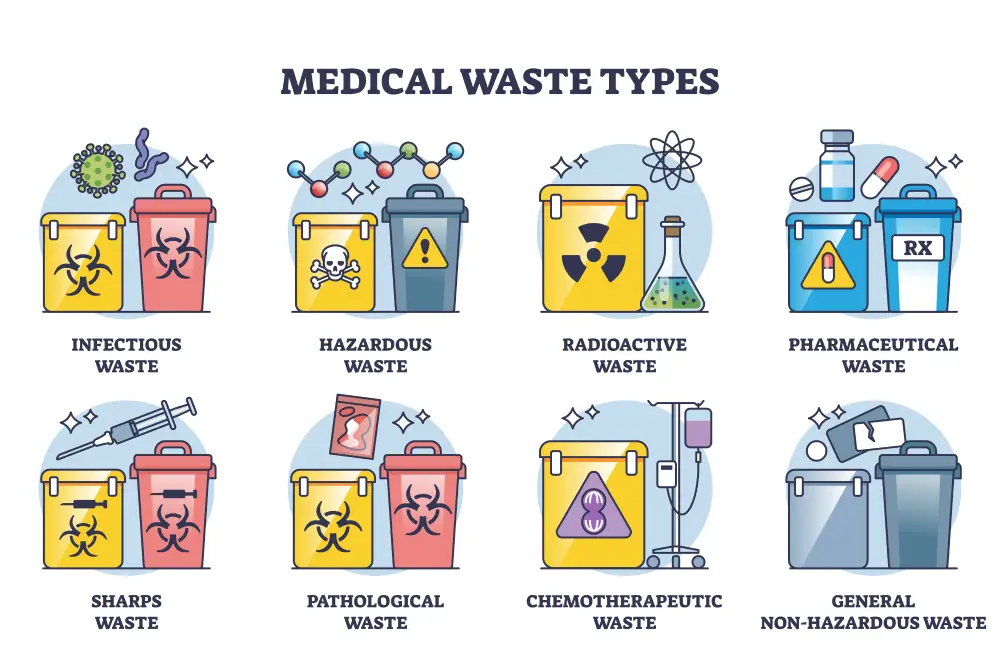
Misclassifying medical waste can lead to serious compliance issues and even pose health risks. Understanding the proper classification of waste is essential for healthcare facilities, as it helps ensure safety and adherence to environmental standards. Let’s explore the most common misclassification mistakes and how to avoid them.
Why Medical Waste Classification Is Crucial for Compliance
Each type of medical waste requires specific handling and disposal methods. Misclassifying waste, such as mixing sharps waste with regular trash, can result in severe consequences, including environmental contamination, fines, and penalties from the EPA or OSHA.
Common Medical Waste Misclassification Mistakes
Here are some of the most common mistakes healthcare facilities make when classifying their medical waste:
Mixing Infectious and Non-Infectious Waste
This is one of the most frequent errors. Items that may seem clean or non-infectious (gauze or cotton balls) can still contain harmful pathogens.
Improper Sharps Disposal
Not using sharps containers or mixing sharps with other types of waste can result in injuries and exposure to diseases.
Failing to Label Properly
Improper labeling can make it difficult to determine the type of waste and whether it has been disposed of in compliance with regulations.
Not Segregating Pharmaceutical Waste
Expired medications should not be disposed of with general waste, as they can pose a threat to public health and the environment.
How to Avoid Misclassification of Medical Waste
To avoid these common mistakes, healthcare facilities must implement strict protocols. Here’s how you can improve medical waste classification at your facility:
- Implement Staff Training Programs: Regularly train your staff on how to correctly segregate medical waste.
- Use Clear Labeling Systems: Properly label containers and bins to indicate the waste type.
- Work with a Certified Waste Disposal Company: Partner with professionals who can help with proper classification and compliance.
- Adopt Waste Audits: Regular audits of your medical waste disposal processes can help identify areas for improvement.
For more on creating effective waste disposal protocols, visit our compliance blog.
How NEIE Medical Waste Services Can Help
NEIE Medical Waste Services specializes in helping healthcare providers classify and dispose of medical waste properly. We offer training, consultation, and ongoing support to ensure your facility is compliant with all regulations. Learn more about how we can help on our compliance services page.
Stay Compliant, Stay Safe
Properly classifying medical waste is essential for compliance, safety, and environmental health. By avoiding common misclassification mistakes and following proper disposal guidelines, your facility can reduce the risks of fines, health hazards, and other legal complications.
Ready to ensure your medical waste is handled correctly? Contact NEIE Medical Waste Services for tailored waste management solutions and compliance assistance.